


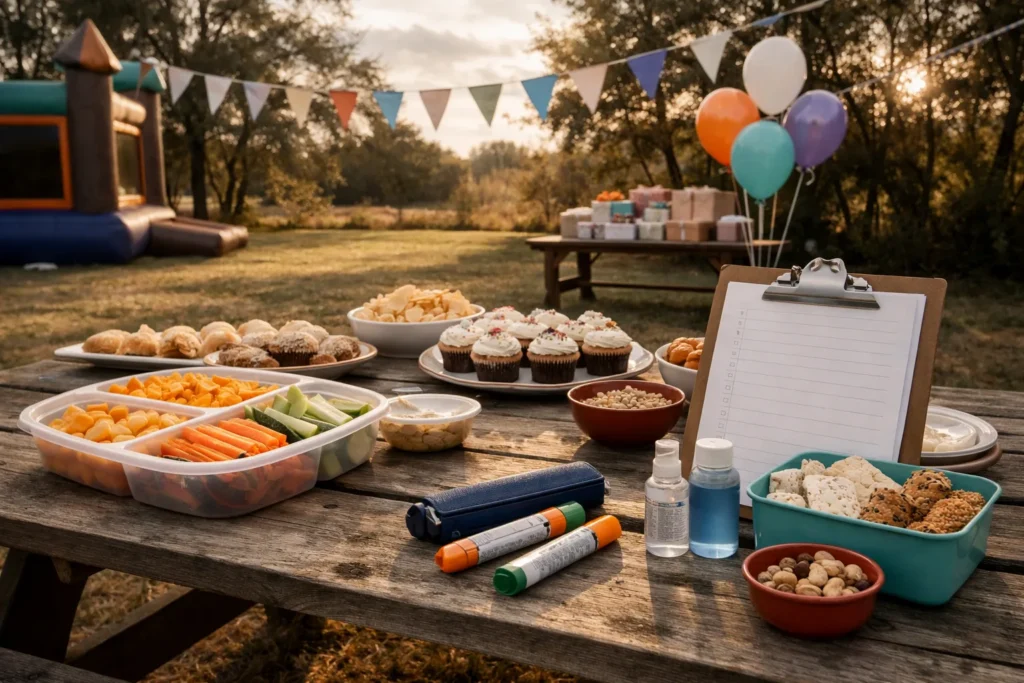
Food allergies affect millions of children in the United States, and a birthday party is full of the foods that cause trouble: cake, ice cream, candy, and snack mixes. You do not need to be an expert to host a safe party. You need to ask early, read labels, keep food separate, and know what to do if something goes wrong. Food Allergy Research & Education, known as FARE, publishes guidance for hosts, and the advice below follows its general approach.
Know the common allergens
Under U.S. law, nine foods are recognized as major allergens: milk, eggs, fish, shellfish, tree nuts, peanuts, wheat, soy, and sesame. The FDA requires these to be listed on the labels of packaged food. Knowing the list helps you read labels at the store and answer questions from parents. You can read about food allergen labeling at fda.gov.
Ask parents on the invitation
The easiest moment to ask is when you send invitations. A single line does the job: “Please let us know about any food allergies or dietary needs when you reply.” When a parent responds with an allergy, follow up with a short message and ask three questions:
- What is your child allergic to, exactly?
- Is it safe for your child to eat food prepared in the same kitchen, or should the food be completely free of the allergen?
- Would you like to bring a safe treat for your child, or would you prefer to see the labels?
Many parents of allergic children are used to checking everything and are glad to be asked. Some will offer to bring their own cupcake so the child can join the cake moment. Accept the offer gladly and keep it simple.
Read labels and keep the packaging
Keep the packages of the food you serve so a parent can read the label. Look for the “contains” statement, and remember that “may contain” warnings are voluntary and differ from brand to brand. If you are not sure, do not guess, and let the parent decide. Be careful with bakery cakes and homemade treats, where ingredient information may be incomplete. Ask the baker for a list of ingredients and whether the kitchen handles nuts.
Prevent cross-contact
Cross-contact happens when a tiny amount of an allergen ends up in a safe food. In a party kitchen it can happen with a shared knife, a serving spoon, or a hand that touched a peanut butter sandwich. A few habits make a big difference:
- Wash hands, counters, and tools with soap and water before preparing food. Hand sanitizer does not remove allergens.
- Use separate serving spoons for each dish, and label them.
- Put the safe food for an allergic child on a separate plate before the rest of the food comes out.
- Keep nut-containing items, if you serve any, at a separate table.
- Wipe tables and high chair trays after each snack.
The easiest approach for many hosts is to avoid the main allergens altogether for the whole party. A nut-free party is simple to run and is easier for everyone to understand.
Create a simple emergency plan
Ask the parent of an allergic child where the child’s medicine is and who will carry it. Many children with severe allergies carry an epinephrine auto-injector, and a parent will usually stay at the party. If the parent is not staying, ask them to write down the child’s medicines, instructions, and a phone number. Keep a charged phone nearby. If a child shows signs of a serious allergic reaction, such as trouble breathing, swelling of the face or lips, hives, vomiting, or dizziness, follow the plan the parent has given you and call 911. Do not wait to see if it gets better.
This article is general information, not medical advice. Talk to a parent or doctor about the specifics of a child’s allergy, and rely on the child’s own written action plan.
Make the party fun for everyone
A child with an allergy should not feel like the problem. Plan activities that are not centered on food: a game, a craft, or a scavenger hunt. Serve a treat that everyone can share, such as fresh fruit or a cake made without the main allergens. And thank the parent for telling you. For more on planning a party menu, see the Party themes and decor section.