

Eight-year-olds are at a sweet spot for a scavenger hunt. They can read clues, work in teams, and stay focused for an hour or more, but they still love the thrill of a treasure. A big public park is a perfect setting, and Brackenridge Park in San Antonio, Texas, with its shade trees, walking paths, and river views, is a good example of the kind of place that works. This plan covers a two-hour party for about 12 children, with timing, clues, safety, and a backup.
Before you go: check the rules
Public parks have rules about gatherings, group size, amplified sound, and decorations, and those rules change. Contact the park’s office or check the city’s parks website before you decide on a spot. Ask whether you need a reservation or a permit for a group your size, whether there are limits on balloons, and what the restroom and parking options are. Visit the park the week before, if you can, to walk the route and note any hazards such as uneven ground, water, or busy roads. Local information is available through the City of San Antonio’s official site at sanantonio.gov.
A two-hour timeline
- 0:00 to 0:15, arrival. Greet each child, hand out team badges or bandanas, and put name tags on every team’s bag.
- 0:15 to 0:30, briefing. Gather the teams under a shady tree, explain the rules, and read the first clue aloud.
- 0:30 to 1:20, the hunt. Teams follow a trail of eight to ten clues around a defined area.
- 1:20 to 1:40, the treasure. Teams find the final prize, a box with a snack or small treats for every child.
- 1:40 to 2:00, cake and goodbyes. Serve cake, juice, and water at a picnic table.
How to build the clues
Write clues that point to features the children can easily see, so you do not need to hide anything. For example: “I have four legs but I never walk. Find me where you sit and rest.” (A park bench.) Other clues can lead to a tree, a trash can, a water fountain, a sign, a bridge, or a picnic table. Keep the language simple and the order logical, so that the route loops back to the start.
- Use eight to ten clues, so the hunt lasts about 45 minutes.
- Write each clue on an index card and put them in numbered envelopes.
- Add a small task at some stops: “Hop on one foot for ten seconds,” “Name three kinds of leaves.”
- Take photos of each location the day before and keep a printed answer sheet for the adults.
Mix riddles, picture clues, and a code or two for older kids. A simple code, such as A equals 1, B equals 2, gives the strongest readers a challenge.
Teams and roles
Make teams of three or four children and mix friends with children who do not know each other well. Each team has one adult “guide” who walks with them, reads when needed, and enforces the safety rules. Give each child a role: the reader, the navigator, the clue keeper, and the photographer. If the group is small, run one team and keep the pace relaxed.
Safety rules for a park
- Define the boundary. Walk the area with the children and point out the limits: “You may not go beyond the big tree or the picnic tables.”
- Stay with an adult. No team walks alone, and everyone stays together.
- No water play near rivers, ponds, or creeks unless a lifeguard is on duty. Keep children away from the water’s edge.
- Stay away from roads and parking lots. Walk, do not run, on paths shared with bikes and cars.
- Do not touch plants or animals you do not know. Poison ivy, insects, and snakes can be a problem. Tell children to leave wildlife alone.
- Bring a first-aid kit and a phone, and keep a list of parent phone numbers and allergies.
Heat, water, and shade
San Antonio summers are hot, and a park hunt in July can be risky. Schedule the party for morning or early evening, and choose a route with shade. Give each team a water bottle, and call a break every 20 minutes to drink and rest in the shade. The Centers for Disease Control and Prevention explains how to recognize heat illness at cdc.gov. Signs such as heavy sweating, dizziness, headache, nausea, or confusion mean a child should stop, cool off, and drink water, and a serious case needs medical help. Add sunscreen and hats to the invitation.
What to bring
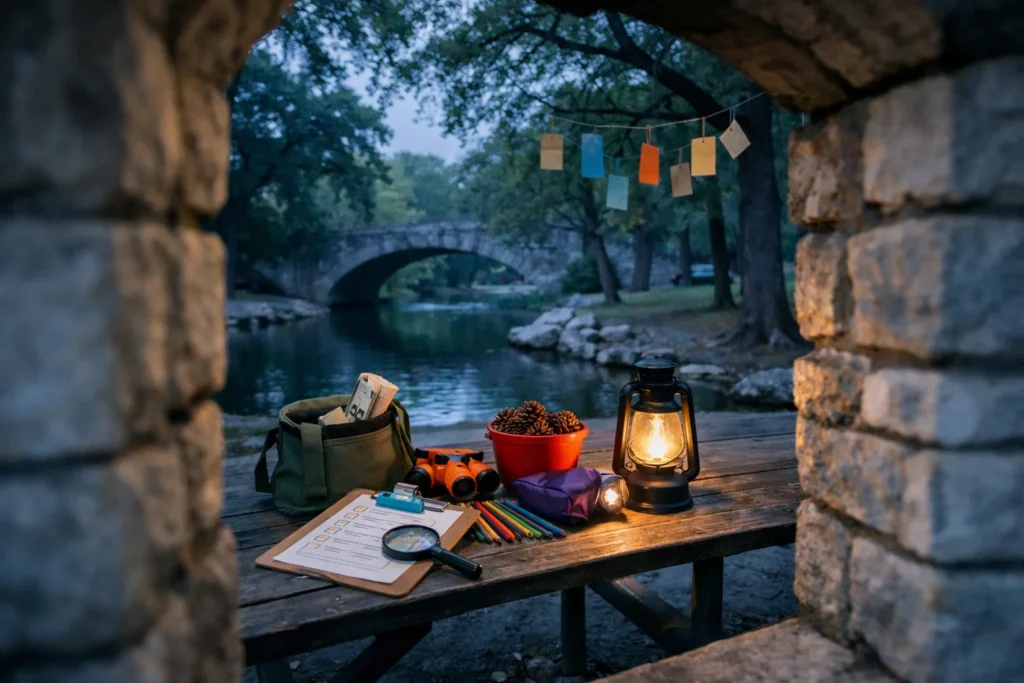
- Clue cards, envelopes, pencils, and a clipboard
- A water jug and cups, plus a cooler with ice
- Napkins, wipes, and trash bags
- A first-aid kit, sunscreen, and bug spray
- A picnic blanket or a folding table
- A small prize bag, with items safe for the age group
The treasure
The final treasure does not have to be expensive. A shoebox with snacks, stickers, and a small toy for each child is plenty. If you are serving food, ask parents about allergies and keep food safety in mind in the heat. Perishable food should not sit out for more than one hour when it is above 90°F (32°C). A cooler with ice packs is worth the effort.
A backup plan
If it rains, or the heat is extreme, move the party to a covered picnic shelter, a garage, or a home. The clues can be rewritten for a house: “Find me where we keep the cold food” leads to the refrigerator. Tell parents when to expect a decision, such as 9 a.m. on the day of the party. Having the backup ready in advance makes the plan easy to switch.
Variations that keep it fresh
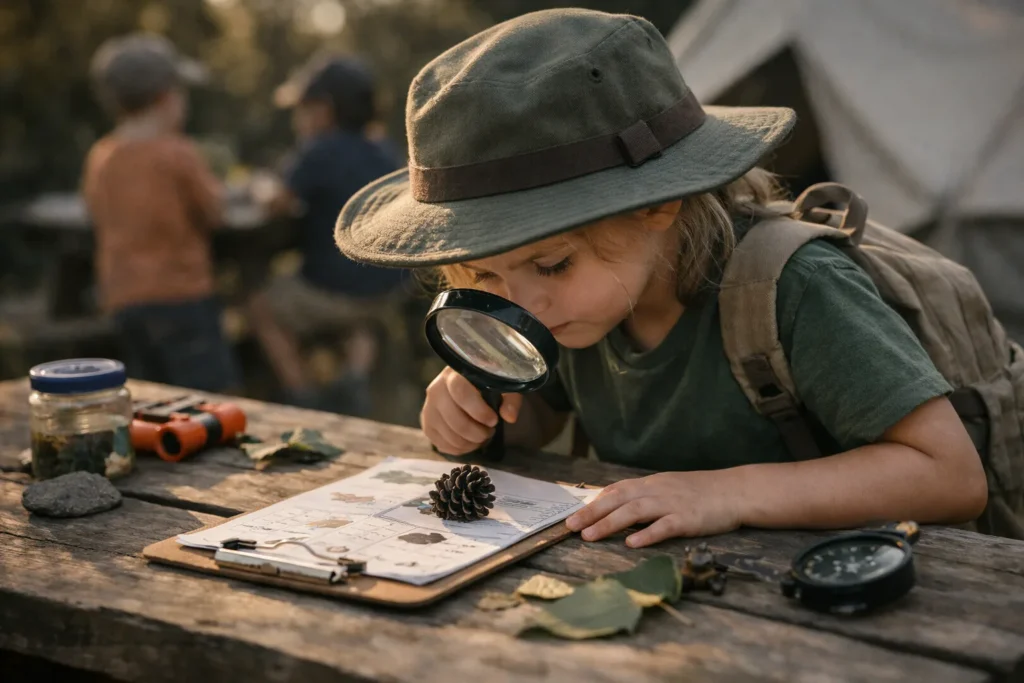
For a themed hunt, use a pirate story, a detective story, or a nature theme where children collect items, such as a leaf or a stone, in a bag. Collecting is best done with a “look but do not pick” rule in many parks, so give each team a camera or a checklist to tick off what they find instead. For another approach, give each team a map of the park, and ask them to plan a route. For more ideas on timing and cost, see the Venues and budget section.