


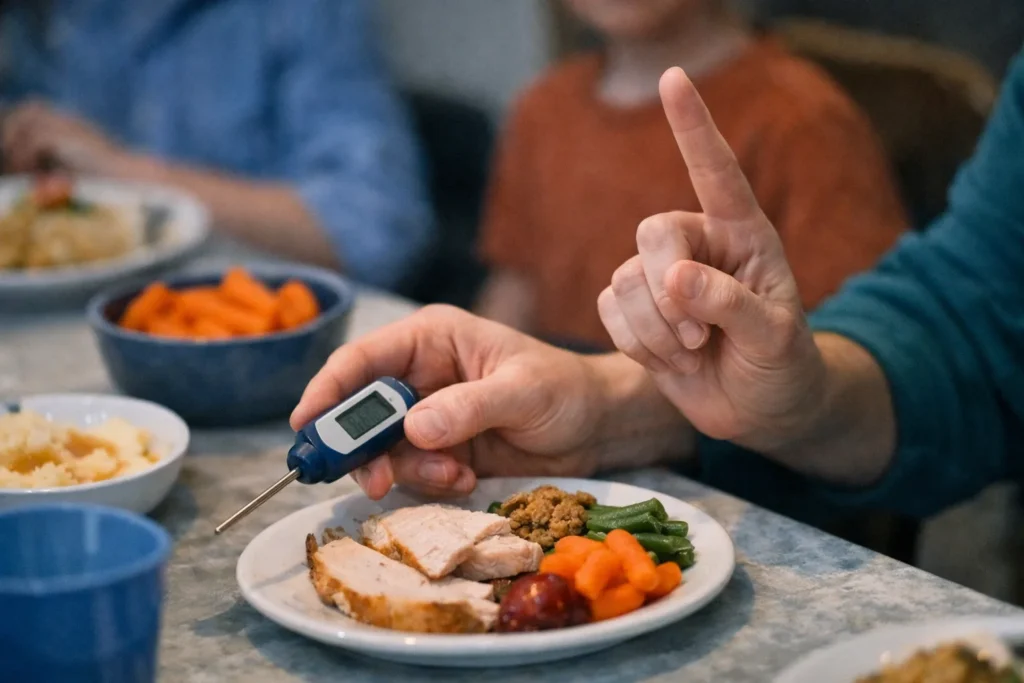
The kids’ table is a Thanksgiving tradition, and with a little planning it can be the most relaxed spot in the house. Small hands get their own menu, a few simple activities fill the long wait before dinner, and the adults get a break. The one place where you should be strict is food safety. A holiday meal involves a big bird, many dishes, and hours between cooking and cleanup, which is exactly the situation where food-borne illness spreads.
A menu kids actually eat
Keep the plate familiar and let kids build it themselves:
- Turkey in small, boneless pieces, which are easier for young kids to chew and swallow.
- Mashed potatoes or soft rolls for the child who skips everything else.
- Cooked vegetables such as green beans, carrots, or corn, served in small pieces.
- Cranberry sauce in a small spoonful, since it is tart.
- Apple slices or fruit instead of a heavy dessert, with pie served in small wedges.
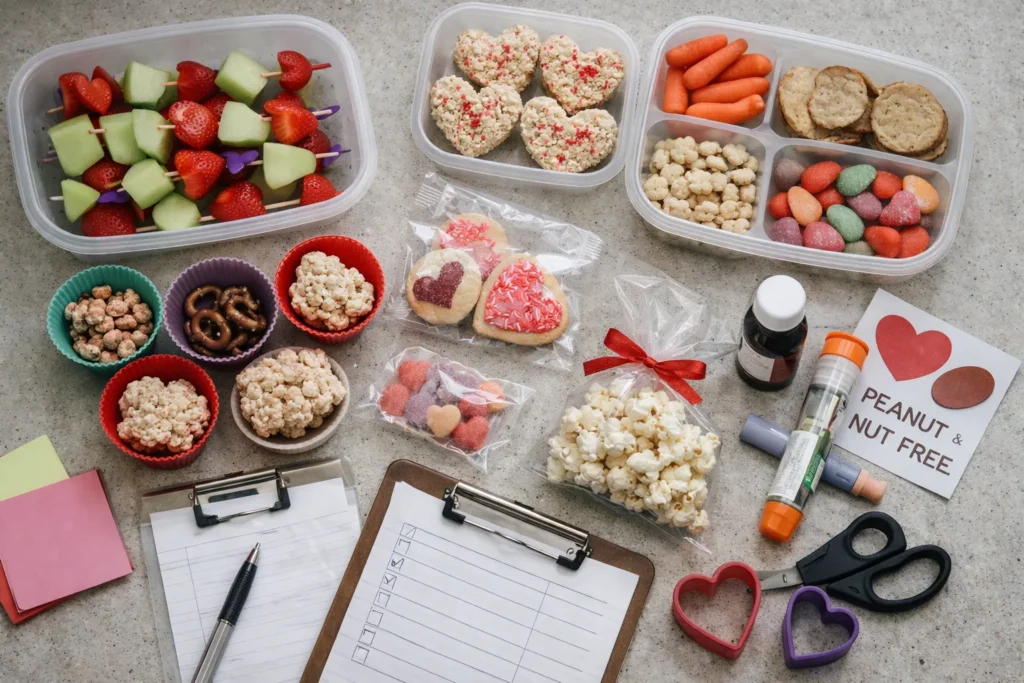
Cut food into small pieces for toddlers, and avoid whole grapes, nuts, and chunks of raw carrot for children under 4. Ask parents about food allergies, especially to tree nuts and eggs, since many holiday dishes contain them.
The turkey and the thermometer
The U.S. Department of Agriculture has published turkey guidance for decades, and its advice is simple: use a food thermometer. Turkey is safe when the thickest part of the breast, the innermost part of the thigh, and the innermost part of the wing reach 165°F (74°C). Color is not a reliable sign. If the turkey is stuffed, the stuffing should also reach 165°F. Thaw a frozen turkey in the refrigerator, not on the counter, and give it plenty of time, about a day for every 4 to 5 pounds (1.8 to 2.3 kg).
“Bacteria that cause food-borne illness multiply rapidly between 40°F and 140°F, so perishable food should not sit out for more than two hours.” — U.S. Department of Agriculture, food safety guidance
Two hours and the danger zone
The temperature range of 40°F to 140°F (4°C to 60°C) is often called the danger zone, because bacteria grow quickly there. The USDA recommends refrigerating leftovers within two hours of cooking. That means the clock starts when the food comes off the stove or out of the oven, not when the party ends. Set a timer, and when it goes off, put away the turkey, the gravy, and the side dishes in shallow containers. Divide a large turkey into smaller portions so it cools quickly in the refrigerator.
Leftovers are usually safe for three to four days in the refrigerator. Reheat them to 165°F before eating. If you want to keep them longer, freeze them in labeled containers.
Keep the kids’ table safe
- Serve food in small portions, so the dishes do not sit on the table for hours.
- Have kids wash their hands before eating, with soap and warm water for 20 seconds.
- Keep hot dishes and the gravy boat at the adults’ table and let an adult serve the kids.
- Use a separate cutting board and utensils for raw turkey.
- Never wash a raw turkey in the sink; it spreads germs around the kitchen.
Activities that keep the table calm
Cover the table with kraft paper and put out crayons so the kids can draw while they wait. Try a “thankful” game, where each child names something they are glad about, or a place-card craft with paper leaves. Both ideas are quiet and cost very little. If someone wants a story, a few pages about the first harvest feast and the Pilgrims at Plymouth Rock can add a bit of history that suits the day.
For more ways to keep children busy at a family dinner, take a look at our games and activities section.