

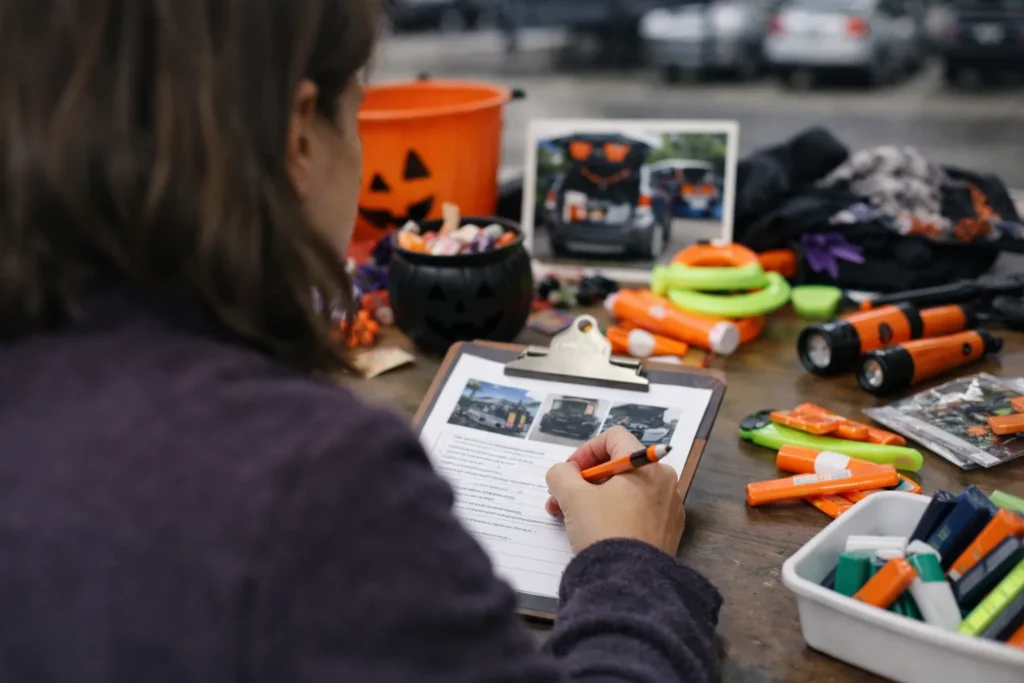
Trunk-or-treat moves trick-or-treating into one controlled spot: a church lot, a school lot, a cul-de-sac, or a big backyard. Kids walk from car to car, or from table to table, and collect treats in a small space with no street crossings. It is a good fit for toddlers and preschoolers, for families in rural areas, and for anyone who worries about cold or dark evenings. Here is a plan you can follow with a dozen families or fifty.
Pick the place and the time
Choose a flat area with a single entrance if possible. A parking lot works well when you can block off a section and keep moving cars away from the kids. Late afternoon, from about 4 to 6 p.m., fits young children best because it is still light and bedtime is not far off. If you plan the event after dark, add the lighting below.
Get permission from the owner of the lot, and ask whether you need to notify neighbors or the local police department. Set a rain date or an indoor backup, such as a gym.
Lay it out like a small street
- Park the cars in a horseshoe or two rows with space for a wide walkway between them, at least 10 feet (3 m).
- Put the cars in park with the parking brake on, and keep keys with an adult.
- Mark a “start” and “finish” point, and keep one path in and one path out so the line moves.
- Set a separate table for the youngest children, where the treats are soft and the line is short.
Light and visibility
Safe Kids Worldwide, a nonprofit focused on preventing childhood injuries, publishes Halloween safety tips, and its advice starts with being seen. Add string lights, battery lanterns, or glow sticks around the trunks, and ask trick-or-treaters to carry a flashlight or wear reflective tape on costumes. Do not use open flames in the decorations. A real candle inside a paper bag or a pumpkin can ignite a costume.
Costumes that work
Ask families to choose costumes that fit well, so kids do not trip on long hems. Face paint is usually a safer choice than a mask that blocks the view, and it should be tested on a small patch of skin ahead of time. Props such as swords and wands should be soft and short. Both the Centers for Disease Control and Prevention and the safety groups advise parents to supervise young children throughout the event.
Treats, allergies, and non-food options
Candy is the main event, yet it is the part that can be risky. Hard candies, gum, and small items are choking hazards for children under 4. Keep a separate bowl of soft, large treats for the youngest. Many candies contain peanuts, tree nuts, milk, or other common allergens, so tell guests how to read labels and encourage each car to include a non-food option, such as stickers, bouncy balls, or pencils. Some families use a teal pumpkin as a sign that non-food treats are available.
Ask parents to inspect their child’s candy before eating it, and to throw away anything that is unwrapped or looks torn.
Add games and a snack station
A trunk-or-treat is more than a line for candy. Add a costume parade at the start, a simple game such as a bean bag toss in a corner, and a table with cider and fruit for people who want a break from sugar. Two or three activities keep the crowd moving and give younger children something to do while they wait.
Adult roles
- Greeters at the entrance who direct families and remind them of the rules.
- Traffic monitors who keep cars out of the walkway.
- First aid contact with a small kit and a phone nearby.
- Clean-up crew with trash bags, because wrappers blow away in the wind.
If you are also planning another event, take a look at our themes and decor section for decorations that fit a simple Halloween setup.