

Picking a theme is easier when you start with age. A baby cares about colors and cake, a preschooler wants to pretend, and a school-age child wants rules, teams, and something to win. This guide matches a theme to each birthday from one to eight. It was written with Texas parties in mind, where an outdoor party in spring or fall is often a safe bet and a July afternoon calls for shade and water, but the ideas work anywhere.
Themes by age at a glance
| Age | Theme | Decor idea | Activity |
|---|---|---|---|
| 1 | Farm animals | Red and white gingham, paper barn, hay-colored runner | Animal sounds and a soft play blanket |
| 2 | Zoo animals | Animal-print paper, jungle leaves, a few stuffed animals | Animal parade and bubble play |
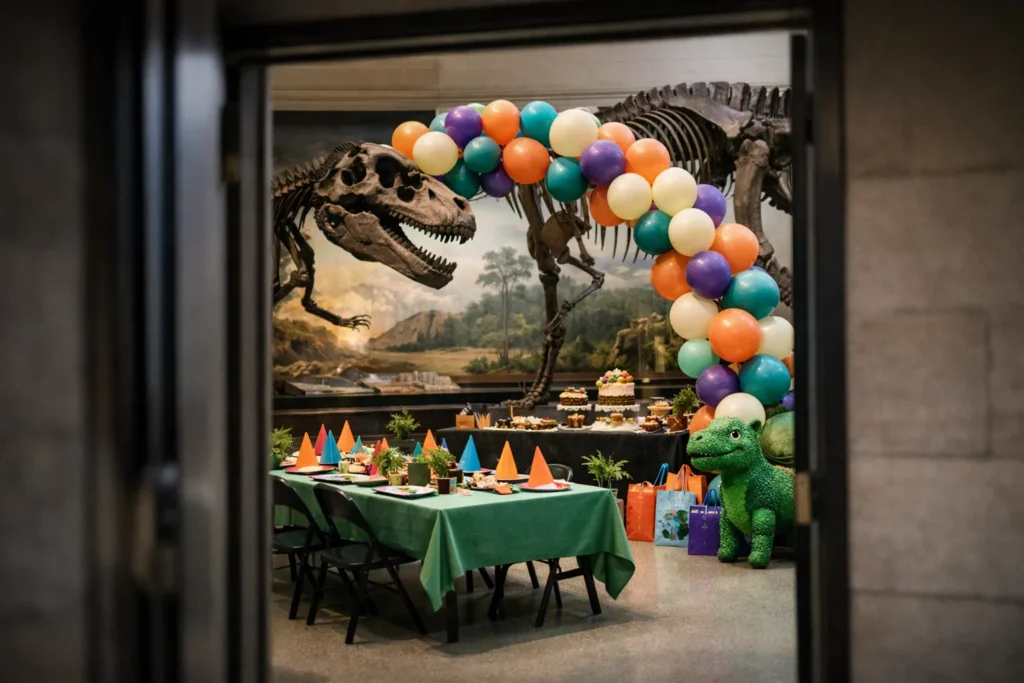
| 3 | Dinosaurs | Green and brown streamers, paper footprints | Dinosaur stomp and a sand dig |
| 4 | Ocean | Blue paper waves, paper fish, a shell border | Fishing game with magnets |
| 5 | Space | Dark paper walls, stars, a countdown | Rocket launch and astronaut training |
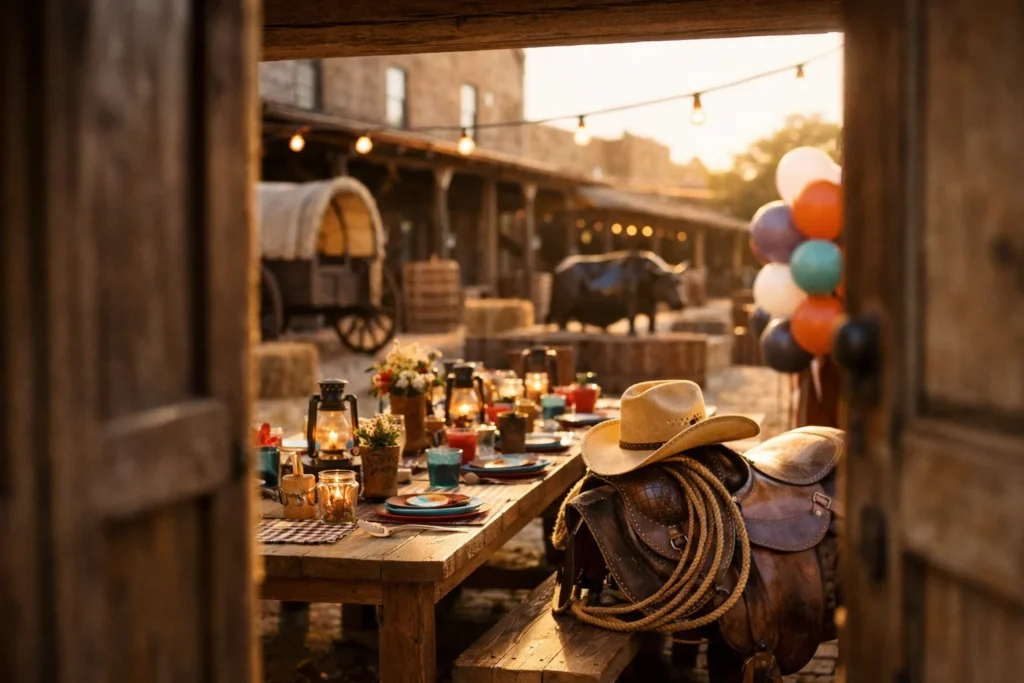
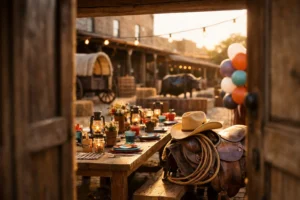
| 6 | Cowboys and ranch life | Bandanas, burlap, mason jars | Stick horse race and treasure hunt |
| 7 | Detectives and mysteries | Magnifying glasses, paper fingerprints, a “case file” sign | Mystery hunt with simple clues |
| 8 | Sports and field day | Team colors, ribbons, a scoreboard | Relay races and a mini medal ceremony |
These are suggestions, not rules. If your child is passionate about trains or princesses, go with that. Age just tells you how long the activities should last and how much help the kids need.
Ages one and two: keep it small and gentle
A baby’s party should be about 90 minutes long, with a small guest list and a quiet corner. The American Academy of Pediatrics notes that very young children learn through simple play and daily routines, so the best entertainment is a blanket, some toys, and a few familiar faces. Theme-wise, animals are ideal: they are easy to recognize and fun to imitate. Keep decorations out of reach, avoid small objects, and cut all food into small pieces. You can find general child development and safety information at healthychildren.org.
Ages three and four: pretend play takes over
Three- and four-year-olds love to pretend. Dinosaurs, the ocean, and superheroes give them a role to play. Keep games short, about 10 minutes each, and mix active play with calmer activities such as a craft. In a Texas summer, plan outdoor games for the morning or early evening, and set up water play and shade. Make sure children drink water often when it is hot.
Ages five and six: structure and teams
By five, kids enjoy stations, simple rules, and a “job” such as astronaut or ranch hand. A party with three or four stations works well, with a helper at each one. Six-year-olds like a bit of competition, but avoid games where one child is eliminated early. A treasure hunt, a relay, or a craft where everyone wins keeps the mood happy.
Ages seven and eight: missions and independence
Older children like to feel in charge. A detective party with a set of clues, a sports party with teams, or a cooking party with simple recipes gives them a project. Plan on one adult helper per five to six children. Let the birthday child help with the guest list, the menu, and the activities, which gives them a sense of ownership and takes some work off your plate.
How to use the chart
- Start with your child’s age and your guest count.
- Pick a theme that your child cares about, not one you saw online.
- Choose one big decoration and a few small ones, and keep the rest simple.
- Limit activities to three or four, each with a clear time limit.
- Leave 20 to 30 minutes free for the cake and goodbyes.
For help turning a theme into a game plan, take a look at the Games and activities section.