


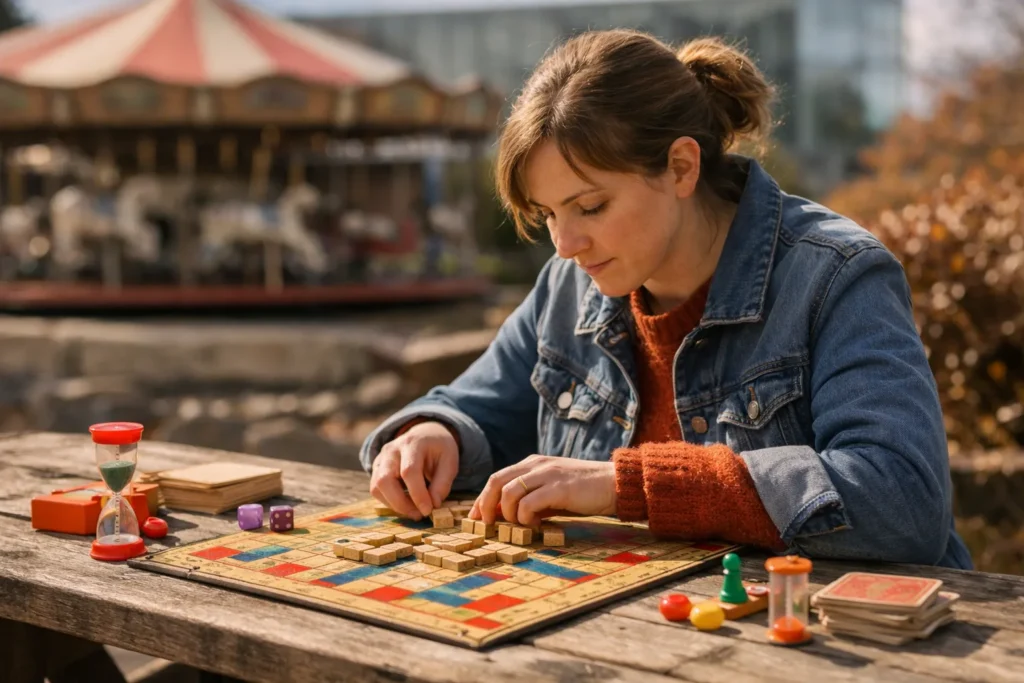
Every few years a new party game or gadget appears, and every few years the kids end up playing musical chairs anyway. The Strong National Museum of Play in Rochester, New York, is a museum devoted to the history and study of play, and it houses one of the largest collections of toys and games in the world. Its National Toy Hall of Fame has honored simple, durable playthings such as the stick, the cardboard box, and the ball. The museum’s website at museumofplay.org is a good place to learn more.
What the experts say about play
Researchers and educators who study play often say that children learn through it: how to take turns, follow rules, handle losing, and work with others. The Strong museum puts the same idea into its mission and exhibits, which show that play is not a break from learning but a way of doing it.
Play is how children explore, practice social skills, and build the ability to follow rules and solve problems, and simple games that anyone can join are among the best tools for it. Summary of the approach of The Strong National Museum of Play.
That is a useful way to think about party games. You do not need an expensive setup. You need a game that is easy to explain, quick to start, and fun to repeat.
Why simple games work
- Easy rules. A child can understand “walk around the chairs, and sit when the music stops” in a few seconds.
- No special equipment. Most classic games need only chairs, a song, or a ball.
- Everyone can join. A mix of ages can play together if the rules are flexible.
- Short rounds. A game that lasts three minutes keeps attention and allows a second try.
- Low prep for you. A host with a dozen kids does not need a long set-up.
Four classics and how to adapt them
Musical chairs
The classic version removes a chair each round, so a child is out each time. That is hard on young children. Try the “no one is out” version: when the music stops, everyone must find a seat, and the chairs are removed while kids share a seat. By the end, everyone is laughing in a pile on a few chairs. Use a soft floor and an adult to stop pushing.
Simon Says
This game practices listening and self-control. For three-year-olds, make the actions simple, such as touching your nose, and skip eliminations. For six-year-olds and older, play the traditional version and let a child be “Simon.” It works anywhere, indoors or out.
Duck, duck, goose
Kids sit in a circle, and one walks around tapping heads. Play on grass or a rug, and set a rule that nobody pushes. For small circles of six or fewer, the running part is short, so everyone gets a turn quickly.
Red light, green light
A leader stands at one end and calls “green light” or “red light.” Players run or freeze. For a younger group, use “walk” and “freeze,” and keep the field small. For older children, add “yellow light” for slow motion.
How to run them well
- Explain the rules in one or two sentences, and show an example.
- Play a practice round before keeping score.
- Keep each game to three to five minutes, and stop while kids still want more.
- Change the rule if someone is upset: “this time, everyone gets a turn.”
- Have an adult watch for pushing and falls.
When games go wrong
A child may cry because they lost, or refuse to play. Do not force it. Offer a role as a helper, such as the music player, the judge, or the referee. A quiet child can pick the song or hold the prize. Most children return to the game within a minute or two. If you are choosing a theme to go with the games, see the Party themes and decor section.